

NYC Draws a Clear Line on AI in Grading, Discipline, and IEPs
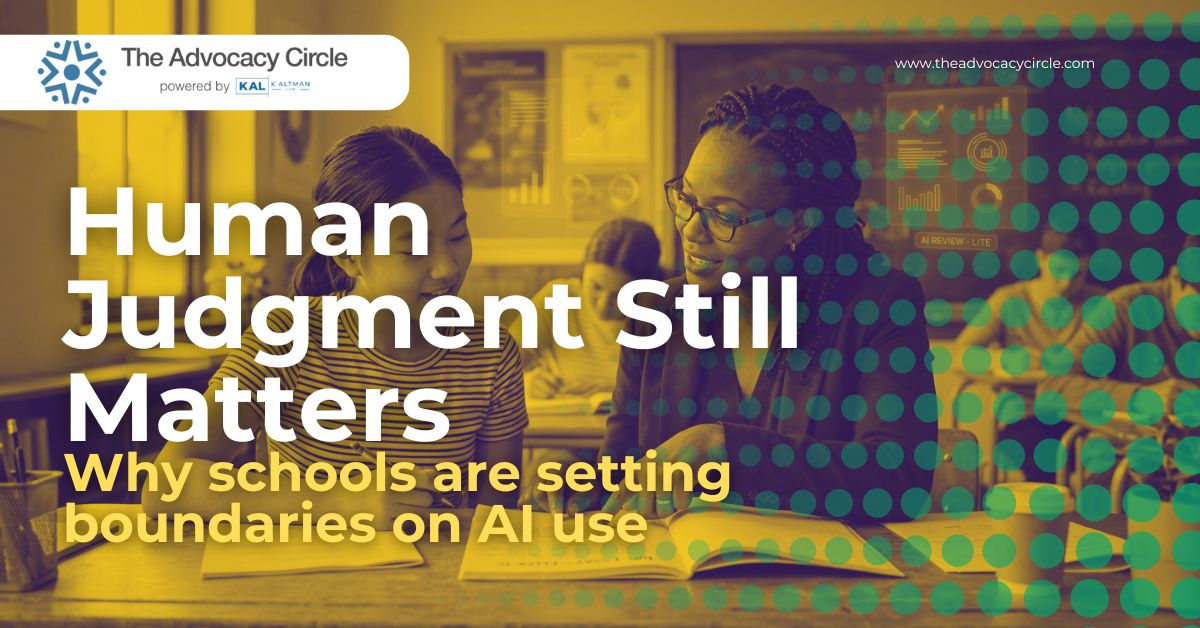
NYC Public Schools limits AI in grading and IEPs, reinforcing the need for human judgment in critical student decisions.

Dan Rothfeld, Chief Operating Officer of The Advocacy Circle
NYC bans AI in grading, discipline, and IEPs—highlighting the need for human judgment in high-stakes student decisions.
According to published reporting, the district’s framework prohibits the use of AI for grading, discipline, graduation or promotion decisions, advanced-class placement, and the development of individualized education programs. It also indicates that translations and disability accommodations still require qualified human review. You can read more about it here.
For The Advocacy Circle, that distinction is central to the mission of helping families navigate complex education systems with more clarity and confidence. As schools explore new EdTech tools, responsible use depends not only on what technology can do, but on what it should never do without meaningful human judgment.
“When technology enters high-stakes student decision-making, boundaries matter,” said Dan Rothfeld, Co-Founder and COO of The Advocacy Circle. “Families need confidence that decisions affecting disability supports, discipline, and academic opportunity remain grounded in qualified human review, clear process, and student-centered accountability.”
TAC believes this type of policy line is especially important for students with disabilities, multilingual learners, and students who are already at greater risk of inconsistent treatment across systems. EdTech can support communication, planning, and access, but automation should not substitute for the context, professional expertise, and individualized review that consequential decisions require.
This development also reinforces a broader lesson for districts and education organizations: responsible innovation often depends on restraint. Progress is not measured by how many processes become automated. It is measured by whether schools can clearly define where technology helps, where it requires supervision, and where it should not be used at all.
What families and educators should do now:
● Ask whether AI is being used only for low-risk support tasks or in decisions that affect grades, discipline, placement, or services.
● Confirm who reviews outputs involving translations, accommodations, and disability-related supports.
● Look for written guardrails that identify prohibited uses, not only approved tools.
● Ask how parents and caregivers can raise concerns if a technology tool affects a student experience.
● Evaluate whether staff training and oversight are keeping pace with new tool adoption.
The Advocacy Circle helps families navigate special education and related school systems with practical tools, step-by-step guidance, and accessible support. TAC’s mission is to help parents prepare, communicate, and advocate with greater clarity and confidence before challenges escalate. Through expert-informed resources, community support, and technology-enabled guidance, TAC works to make advocacy more understandable, proactive, and accessible for families. http://www.theadvocacycircle.com/
This content is provided for general informational purposes only and is not legal advice. Every student situation is fact-specific, and laws, policies, and procedures vary by state, district, school, and institution.
Dan Rothfeld
The Advocacy Circle
+1 947-366-0021
danrothfeld@theadvocacycircle.com
Visit us on social media:
LinkedIn
Instagram
Facebook
Legal Disclaimer:
EIN Presswire provides this news content "as is" without warranty of any kind. We do not accept any responsibility or liability for the accuracy, content, images, videos, licenses, completeness, legality, or reliability of the information contained in this article. If you have any complaints or copyright issues related to this article, kindly contact the author above.
