

Dr. Naveed Akhtar Highlights Hydrogen’s Role in Enabling Zero-Emission Aviation
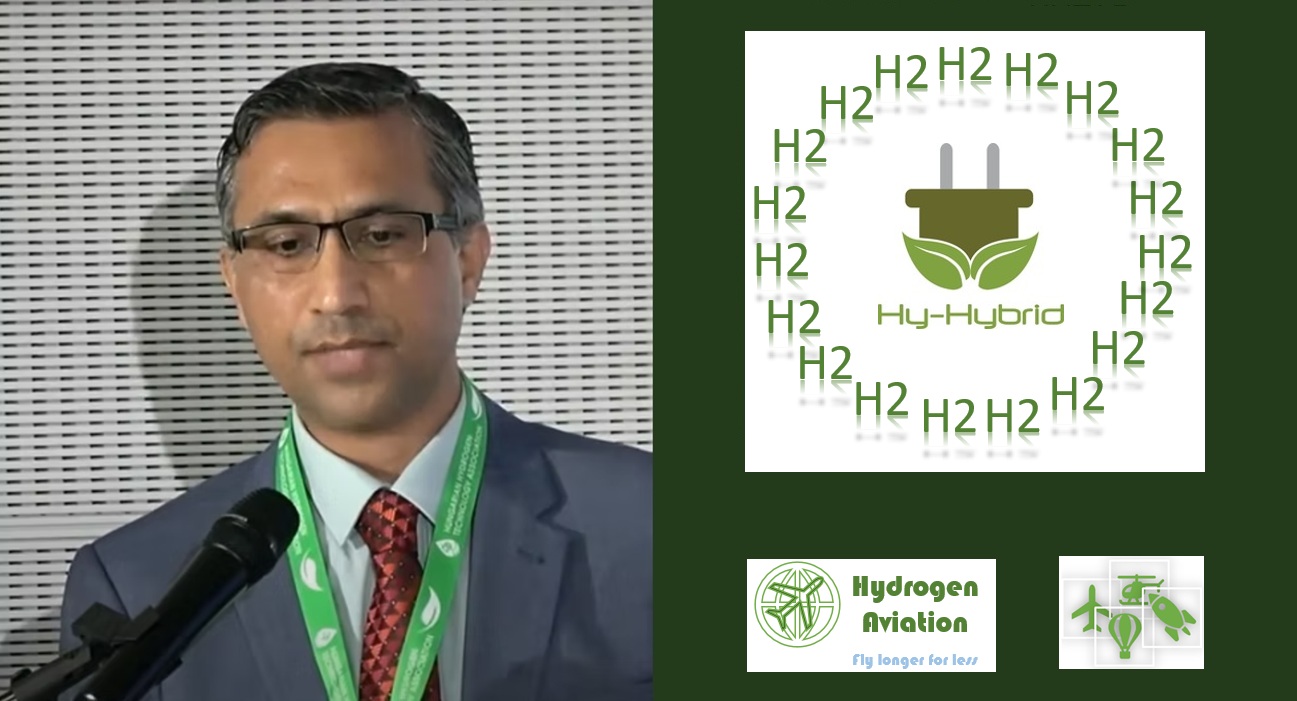
Dr. Naveed Akhtar, Founder, IHAC
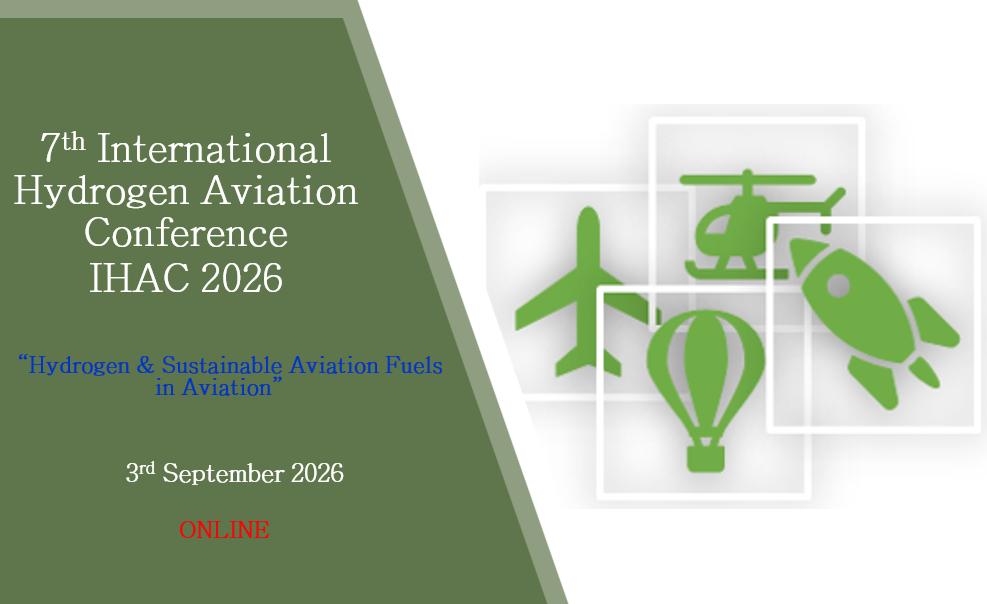
7th International Hydrogen Aviation Conference (IHAC 2026)

Hydrogen aviation is accelerating toward commercial reality as Dr. Naveed Akhtar outlines key technologies enabling zero-emission flight.
GLASGOW, UNITED KINGDOM, April 28, 2026 /EINPresswire.com/ -- The global aviation industry is at a defining moment as it seeks to achieve net-zero emissions while meeting growing demand for air travel. Rising regulatory pressure, climate concerns, and energy security challenges are accelerating the search for alternatives to fossil fuels. Among the most promising long-term solutions is hydrogen, which is increasingly seen as a viable pathway toward truly zero-emission flight. However, scaling hydrogen aviation will require more than technological advances alone - it will depend on integrated infrastructure, investable business models, supportive policy frameworks, and coordinated global leadership across aviation and energy sectors.
At the forefront of this transition is Dr. Naveed Akhtar, Founder and CEO of Hy-Hybrid Energy and Hydrogen Aviation Limited, and Founder of the International Hydrogen Aviation Conference (IHAC), established in 2020 as the world’s first platform dedicated exclusively to hydrogen aviation. With over 25 years of experience in hydrogen energy, fuel cells, and sustainable aviation, Dr. Akhtar shares insights from his journey and outlines the evolving pathway toward clean aviation.
Q: You have spent over 25 years advancing hydrogen and fuel cell technologies globally. What inspired your focus on aviation decarbonisation?
Dr. Naveed Akhtar:
My experience in hydrogen and fuel cells showed me that aviation is one of the most difficult sectors to decarbonise, but also one of the most critical. A key turning point came in 2019 when I was offered an opportunity to join an Airbus team in Germany working on fuel cell technologies. Although I could not take it up for personal reasons, it was the first clear sign of strong momentum in hydrogen aviation from a major aerospace player.
At the same time, Airbus was developing what later became its ZEROe programme, which reinforced my belief that hydrogen aviation was moving from concept to reality. This inspired me to contribute by founding IHAC in 2020 as the first dedicated global platform for hydrogen aviation.
Q: Since launching IHAC in 2020, how has the hydrogen aviation sector evolved?
Dr. Naveed Akhtar:
Since IHAC began, the industry has shifted significantly. In the early years, discussions were focused on concepts such as hydrogen aircraft, airships, and drones as early applications. While interest in hydrogen airships has reduced since around 2022, hydrogen-powered drones have continued to gain traction.
Overall, the focus has moved from whether hydrogen has a role in aviation to how and when it can be scaled, certified, and made economically viable. Today, there is much greater emphasis on real-world demonstrations, infrastructure development, certification frameworks, and the role of sustainable aviation fuels alongside hydrogen.
Q: What is the biggest technical challenge in scaling hydrogen propulsion for commercial aircraft?
Dr. Naveed Akhtar:
The key challenge is not a single component, but system integration - combining hydrogen storage, propulsion systems, infrastructure, and certification into a complete aviation ecosystem.
Certification of fuel cell propulsion systems remains a major bottleneck, as aviation authorities require extensive validation to ensure safety before deployment. Alongside this, sustainable aviation fuels, including e-SAF, will play a complementary role, especially with UK and EU mandates now in place from 2026, helping bridge near-term decarbonisation while hydrogen matures.
Economics will also be critical. As green hydrogen production scales and costs fall through global manufacturing expansion, including developments in regions such as China, hydrogen becomes more competitive. Combined with the high efficiency of fuel cells, this creates a pathway for what I describe as “fly longer for less,” reflecting hydrogen’s potential for both lower emissions and improved operational efficiency.
Q: How close are fuel cell systems to being used in everyday passenger flights?
Dr. Naveed Akhtar:
We are getting closer, but commercial passenger flights require much more than technical readiness. Aviation-grade durability, safety validation, certification, infrastructure, and commercial confidence are all essential.
Having worked across four major fuel cell types-PEMFC, AFC, SOFC, and DMFC-I have seen strong evolution in technology pathways. In aviation, high-temperature PEM fuel cells and SOFCs are gaining traction due to efficiency and system integration advantages.
Fuel cell-electric propulsion is already advancing in smaller aircraft and niche applications. Importantly, Airbus has selected fuel cell-electric propulsion as the preferred drivetrain for its latest ZEROe concept, signalling a clear shift away from earlier hydrogen combustion approaches.
Q: How is infrastructure being addressed for hydrogen aviation?
Dr. Naveed Akhtar:
Infrastructure requires development of the entire ecosystem in parallel-airlines, airports, energy providers, aircraft manufacturers, regulators, and policymakers must all move together.
At IHAC 2020, we introduced the concept of Hydrogen Valleys at Airports to build integrated hydrogen ecosystems covering production, storage, and utilisation. This systems-based approach remains central to scaling hydrogen aviation.
A key challenge is the “chicken-and-egg” problem between infrastructure and demand. Lessons from ground mobility show that fragmented development slows adoption. Aviation cannot repeat this mistake. Success depends on coordinated planning, where infrastructure, aircraft development, regulation, and demand are aligned from the beginning.
Q: What milestones do you expect at IHAC 2026?
Dr. Naveed Akhtar:
At IHAC 2026, I expect to see clearer milestones in aircraft development, airport infrastructure commitments, certification progress, and investment frameworks for commercialisation.
There should also be stronger progress in sustainable aviation fuels and e-SAF, alongside deeper collaboration between industry and governments moving from announcements to implementation.
Certification readiness is especially critical. Safe hydrogen flight requires extensive testing, validation, and performance data, which demands time, funding, and coordinated effort. Public-sector support and policy backing will be essential to accelerate this process.
More broadly, aviation decarbonisation must be seen not only as a climate goal but also as an energy security priority. Geopolitical disruptions, such as risks around fuel supply routes, highlight the importance of diversifying away from conventional jet fuel. Hydrogen and e-fuels will both play key roles, and importantly, both depend on hydrogen, reinforcing the need for strong domestic capability and resilient supply chains.
Q: What is your overall conclusion on zero-emission aviation?
Dr. Naveed Akhtar:
Zero-emission aviation is steadily moving from concept to reality, driven by hydrogen, fuel cells, and sustainable aviation fuels. Its success will depend on coordinated progress across technology, infrastructure, policy, and investment.
Hydrogen Aviation
International Hydrogen Aviation Conference
+44 7424 312756
email us here
Visit us on social media:
LinkedIn
Instagram
Facebook
YouTube
X
Other
Legal Disclaimer:
EIN Presswire provides this news content "as is" without warranty of any kind. We do not accept any responsibility or liability for the accuracy, content, images, videos, licenses, completeness, legality, or reliability of the information contained in this article. If you have any complaints or copyright issues related to this article, kindly contact the author above.
